
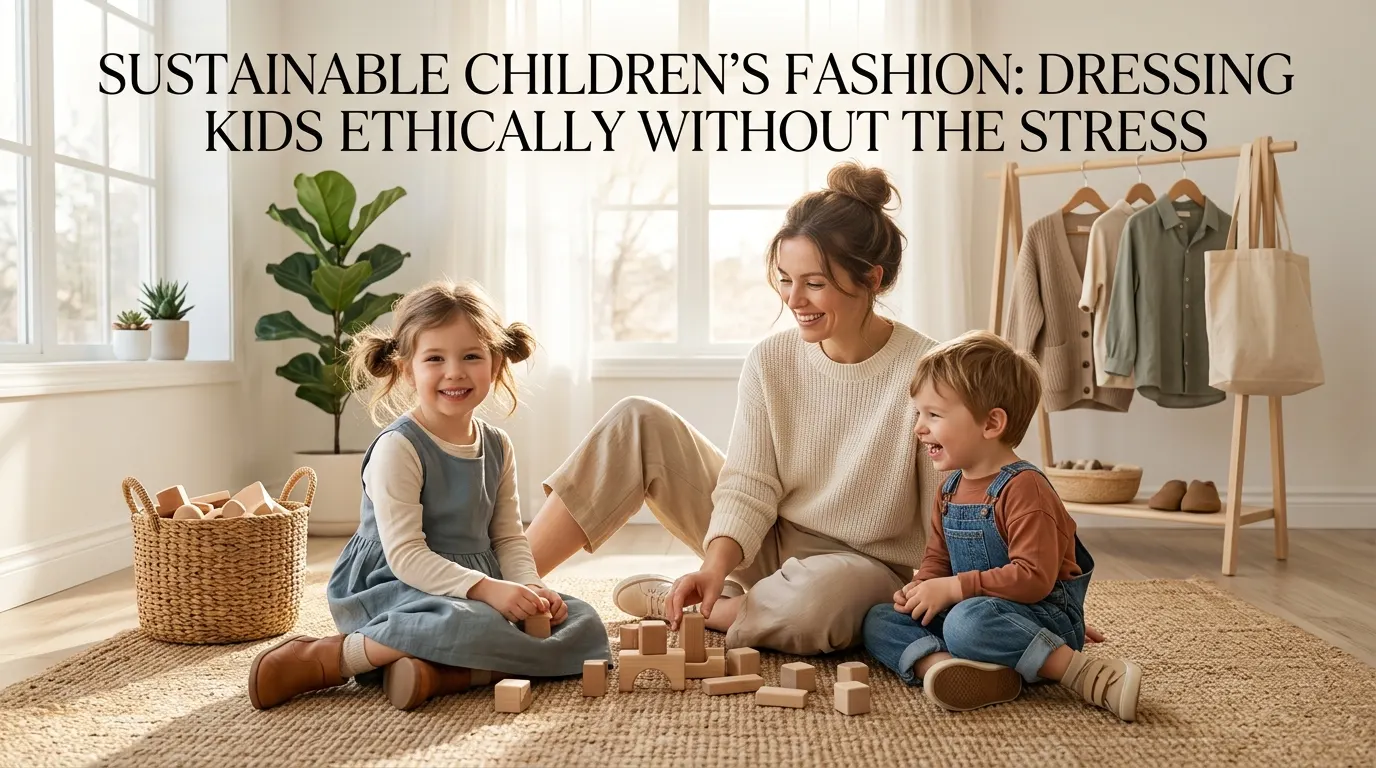
Why Children’s Fashion Is Particularly Worth Making Sustainable
Children’s clothing presents a particularly interesting sustainability challenge. On one hand, children grow so quickly that garments have a naturally short usable life by one child — making the argument for buying cheap and often seem logical. On the other hand, this is precisely why the volume of children’s clothing that ends up in landfill is so significant. And increasingly, parents are finding smarter approaches that are both more sustainable and frequently more economical.
The Second-Hand Revolution in Children’s Clothing
Pre-loved children’s clothing has become completely mainstream, and rightly so. Platforms like Vinted, eBay, and Depop are full of quality children’s clothing that has been worn a handful of times and is in excellent condition. Children’s clothes from quality brands like Mini Boden, Joules, Frugi, and John Lewis often have considerably more life in them than the original owner’s child managed to use.
Local NCT nearly-new sales, Facebook Marketplace, and charity shops in affluent areas are also brilliantly productive for quality second-hand children’s clothing. The key is knowing what brands and fabrics wash well and retain their appearance — this is where it pays to have done some research before shopping.
UK Brands Leading the Way in Sustainable Children’s Fashion
Frugi is perhaps the most established sustainable children’s clothing brand in the UK. They use organic cotton exclusively, are certified by GOTS (Global Organic Textile Standard), and use recycled materials in their packaging. Their prints are bold, cheerful, and popular with children, which matters enormously — sustainable clothing that children refuse to wear helps nobody.
Patagonia’s children’s range is made with recycled and organic materials and comes with the brand’s genuinely impressive repair and recycling programme. While the price point is higher, the quality is exceptional and the brand’s Worn Wear programme allows you to send back old Patagonia items for recycling. This is circular fashion in genuine practice.
H&M’s Conscious line and their children’s organic cotton basics offer accessible sustainability at high-street prices. While H&M as a company has faced criticism over greenwashing, their certified organic cotton basics are a legitimate improvement over conventional cotton production and represent an accessible entry point for parents beginning to think about sustainability in children’s fashion.
Practical Tips for a More Sustainable Children’s Wardrobe
Buy for the next size up, not the current one. A child in a slightly larger size will wear a garment for longer, and most quality children’s clothing is designed with room for growth in mind. Prioritise natural, durable fibres — organic cotton, wool, and linen wash better over time and feel more comfortable against children’s skin. Pass clothing on deliberately — to siblings, friends, family, or NCT sales — so that the useful life of each garment extends as far as possible.
Frequently Asked Questions
Q: Is organic children’s clothing worth the extra cost?
A: For items worn close to skin — vests, pyjamas, t-shirts — organic cotton is genuinely better for sensitive skin and contains fewer chemical residues. For outer layers, the benefit is less significant.
Q: How do I know if a children’s brand is genuinely sustainable?
A: Look for third-party certifications: GOTS for organic textiles, Fair Trade for ethical manufacturing, B Corp for overall business sustainability. Be sceptical of vague claims without specific certification.
Q: What is the most sustainable thing I can do for my children’s wardrobe?
A: Buy less, buy better, and pass it on. Second-hand first, then sustainable brands, then quality conventional brands. The single garment worn by three consecutive children is more sustainable than three individually purchased new garments.