
Why Outerwear Is the Most Important Investment in Men’s Fashion
In Britain, a man’s coat is seen more than almost any other garment in his wardrobe. Given the climate, you will spend a significant portion of the year in your outerwear — which means it is worth getting absolutely right. The best film costumes understand this. Think of Daniel Craig’s navy overcoat in Skyfall, the Barbour jackets of classic British country dramas, or the timeless trench coats that have appeared in everything from classic spy films to contemporary crime dramas.
The Classic British Coat Styles
The trench coat is perhaps the most iconic British garment in existence. Invented for British Army officers during the First World War and subsequently adopted by everyone from Humphrey Bogart to contemporary street style photographers, the trench coat is one of those rare garments that transcends age, occasion, and trend. A quality trench in traditional beige or tan will work with practically every outfit in your wardrobe from jeans to a suit. Aquascutum and Burberry are the heritage names, but M&S and NEXT produce excellent options at far more accessible prices.
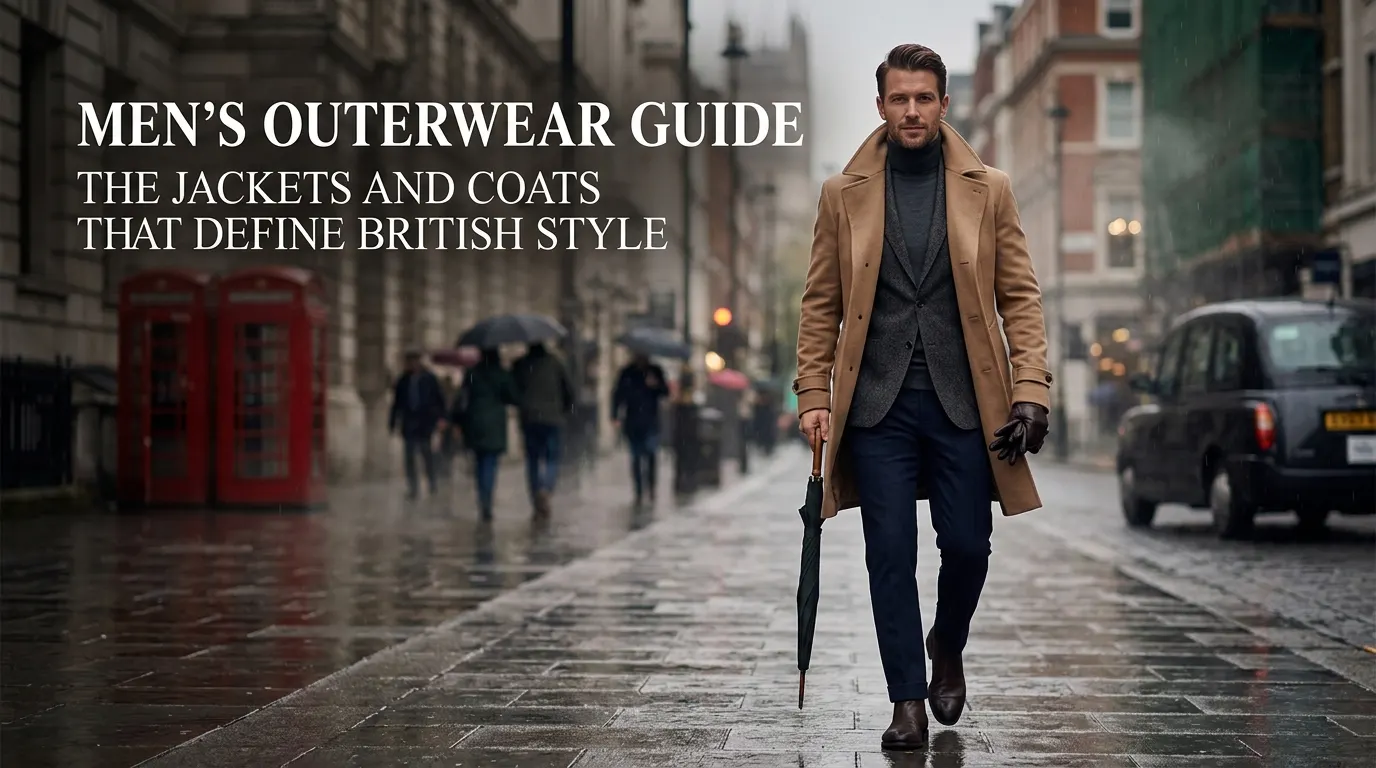
The overcoat — a long, tailored coat in wool or wool-blend fabric — is the most formal option in men’s outerwear. It elevates any outfit beneath it and is the standard choice for business occasions, formal events, and those who want to look genuinely polished. Charcoal, camel, and navy are the essential colours. The length matters: an overcoat that falls to just below the knee is the most versatile option.
The Harrington jacket is a brilliantly British piece of outerwear history. Originally designed in the 1930s and worn famously by James Dean, Steve McQueen, and subsequently by generations of British subcultures from mods to skinheads to indie kids, the Harrington is a lightweight zip-through jacket with a checked tartan lining. In tan, navy, or the traditional buff colour, it is a relaxed alternative to a blazer for smarter-casual occasions.
The Barbour wax jacket is as British as it gets. It is genuinely functional — the waxed cotton is excellent in British rain — and it has a timeless quality that means a classic Barbour will look as relevant in twenty years as it does today. The Beaufort and Bedale are the heritage styles. They pair brilliantly with cords, jeans, and country casuals, but also work surprisingly well in urban environments with smart-casual outfits.
The overshirt or shirt jacket — a heavier garment worn between a shirt and a coat — has become enormously popular in recent years. In brushed flannel, heavy cotton canvas, or even a lightweight quilted version, the overshirt is ideal for milder autumn days when a full coat is too much but a shirt isn’t quite enough. It works well layered over knitwear or a simple tee.
The Modern Additions: Puffer and Technical Jackets
The puffer jacket has genuinely crossed over into fashion territory. High-quality puffers from brands like Canada Goose, Moncler, or more accessibly Uniqlo’s excellent Ultra Light Down range are now worn as stylish outerwear choices rather than just practical cold-weather gear. The key to making a puffer look considered rather than purely functional is fit — avoid oversized options unless you’re deliberately going for a streetwear aesthetic — and keeping the rest of the outfit polished.
Where to Shop Men’s Outerwear in the UK
For heritage pieces, Barbour, Aquascutum, and Belstaff are worth the investment. For quality at accessible prices, M&S, John Lewis own-brand, and Reiss consistently produce excellent coats. For contemporary and trend-conscious options, COS and ARKET are outstanding. Uniqlo provides remarkable value, particularly for down jackets and lighter outerwear.
Frequently Asked Questions
Q: How many coats does a man need?
A: Realistically, three covers most situations — a waterproof or light jacket for casual use, a smart overcoat or blazer-length jacket for formal occasions, and a mid-layer like a Harrington or overshirt for in-between weather.
Q: How do I re-wax a Barbour jacket?
A: Barbour sells reproofing wax directly. Warm the jacket slightly, apply wax with a cloth, work it into seams and areas of wear, then use a hair dryer on low heat to encourage absorption. They also offer a reproofing service.
Q: Is a trench coat worth the investment?
A: Yes, if bought in quality. A well-made trench coat in a natural fabric will last twenty or thirty years with proper care and always look relevant.