
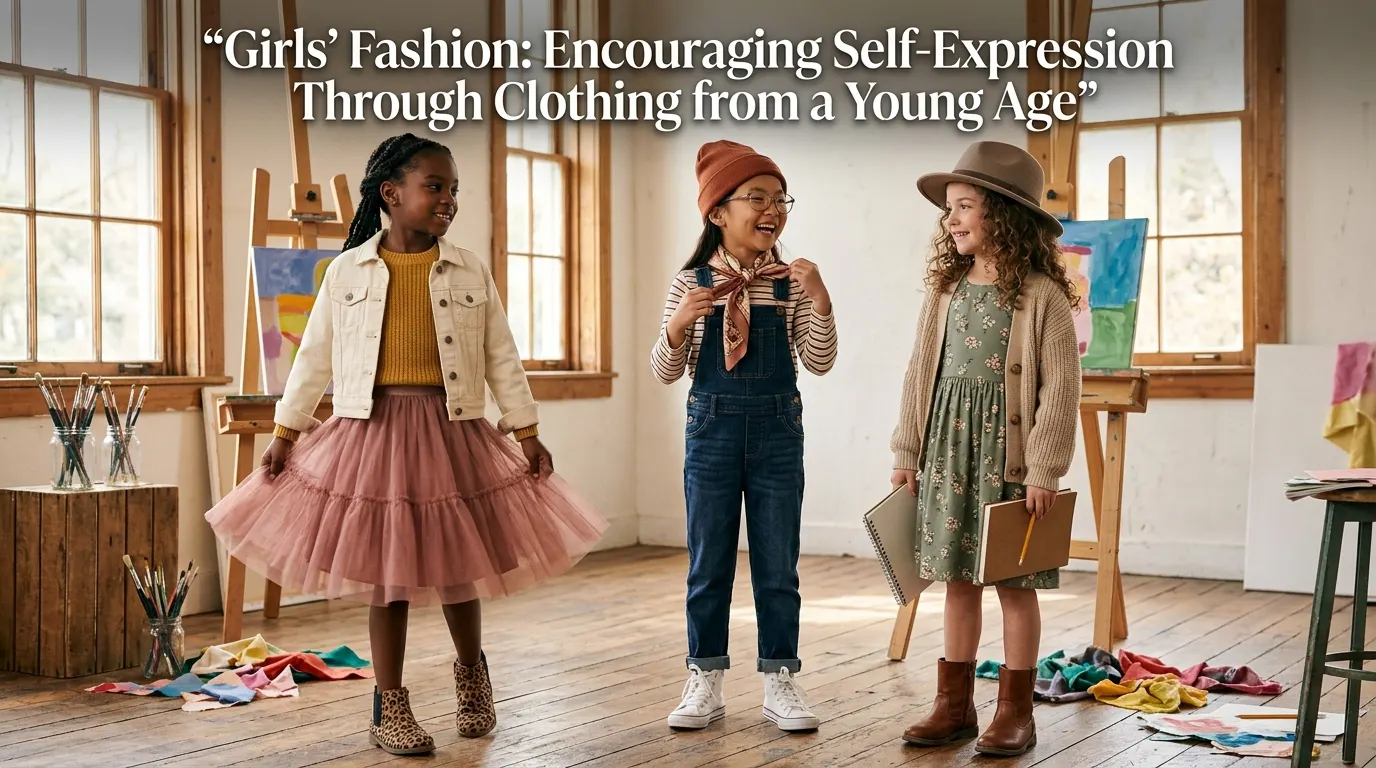
Why Self-Expression Through Clothing Matters for Girls
The young female characters that resonate most powerfully with children today are rarely the passive, prettily dressed heroines of older films. They are active, curious, determined, and frequently dressed in clothing that reflects their adventurous natures. Moana, Merida, Raya — these are characters who wear functional, characterful clothing that allows them to act, not just look lovely. This shift in how young female protagonists dress has filtered down into children’s fashion in genuinely positive ways.
Allowing girls to have genuine input into what they wear — within sensible limits set by parents — is a form of respect for their developing personality and preferences. It teaches decision-making, builds confidence, and creates a more positive relationship with clothing that can last a lifetime. The key is creating a wardrobe of well-chosen options rather than an overwhelming quantity of clothes, so that any combination a child selects will work reasonably well.
Key Trends in Girls’ Fashion This Season
Pinafore dresses in denim or cord remain enduringly popular with girls of most ages. They are practical, comfortable, and effortlessly stylish — worn over a long-sleeve top in cooler months or a puff-sleeve blouse for a more dressed-up feel. The pinafore silhouette is also extremely forgiving and tends to have a longer wearable life than more fitted styles as a girl grows.
Pleated skirts in fun prints — gingham, tartan, floral, abstract — are having a significant moment. Paired with a coordinating or contrasting knit, they create a look that feels deliberately put-together rather than casually assembled. Midi-length pleated skirts add an elegant, almost cinematic quality that girls who love fashion tend to respond to enthusiastically.
Wide-leg or flared trousers in bold colours and interesting fabrics are increasingly common in girls’ collections and reflect the wider fashion trend toward more generous silhouettes. A pair of wide-leg cord trousers in a warm terracotta or rich green, paired with a simple tucked-in tee, looks genuinely stylish and moves brilliantly for active play.
Encouraging a Healthy Relationship with Fashion
Fashion can be a source of genuine joy, creativity, and self-confidence for children when it is approached positively. It can also become a source of anxiety and comparison when it is linked too closely to appearance and approval. The most helpful approach is to frame clothing choices as creative expression — like choosing which colours to use in a painting — rather than primarily as a matter of appearance.
Reading books and watching films featuring female characters with strong, individual style is a wonderful way to expand children’s fashion imagination. Characters who dress distinctively because it reflects who they are — rather than to please or impress others — model a healthy and joyful relationship with clothing.
Frequently Asked Questions
Q: What if my daughter wants to wear the same outfit every day?
A: This is entirely normal and developmentally appropriate. Having duplicate items in the wardrobe or building a near-identical rotation (multiple similar items in coordinating colours) can help practically while honouring the preference.
Q: How do I balance my daughter’s fashion preferences with practical considerations?
A: Establish non-negotiable practical requirements (weather-appropriate, school-appropriate) and within those give as much freedom as possible. Children who feel heard are generally more cooperative about the non-negotiable parts.
Q: What brands do girls particularly love in the UK right now?
A: Mini Boden, H&M, Next, and Zara Kids all have excellent girls’ collections. For more unique finds, small independent brands on Not On The High Street or Etsy often produce distinctive pieces that suit children with more individual taste.